Top 12 System Integrators Doing OT Security Right in 2026
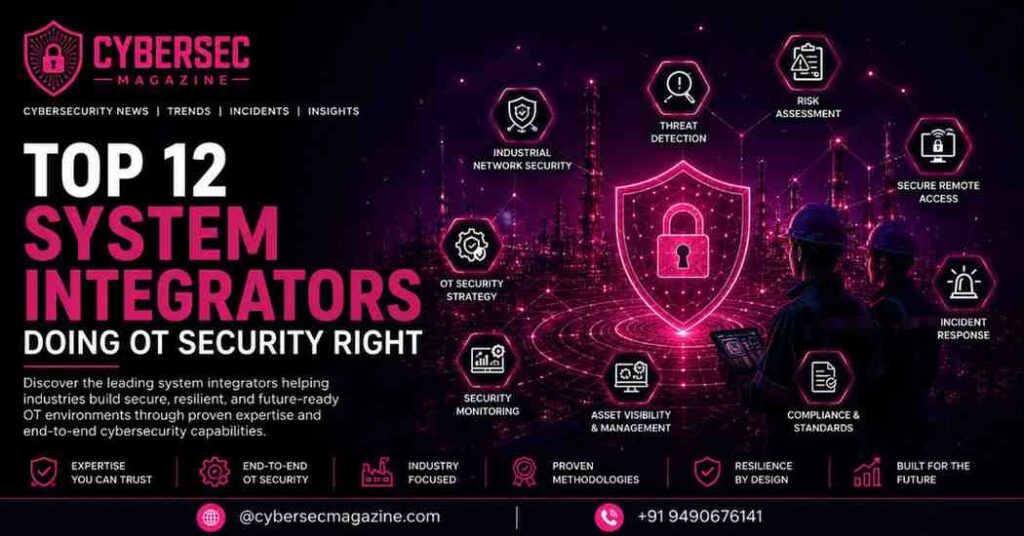
Discover the top 12 system integrators leading the way in OT security. Learn how these experts bridge the gap between IT and industrial resilience.
In the rapidly evolving industrial landscape of 2026, the traditional boundaries between Information Technology (IT) and Operational Technology (OT) have effectively vanished. As organizations embrace Industry 4.0, smart manufacturing, and hyper-connectivity, the attack surface of the plant floor has expanded exponentially. However, protecting these environments is not a task for generalist IT consultants. It requires a specialized breed of system integrators who understand the nuances of PLCs, SCADA systems, and the “availability-first” mindset that keeps critical infrastructure running.
System integrators are the linchpin in this security transformation. They are the architects who build the bridges between legacy industrial processes and modern, zero-trust cybersecurity frameworks. Choosing the right partner is no longer just about network engineering; it is about finding a firm that can harmonize safety, uptime, and robust security posture. Below, we explore twelve system integrators and consultancy powerhouses that are currently setting the gold standard for OT security integration.
Top 12 System Integrators Doing OT Security
1. Dragos
Dragos remains the undisputed heavyweight for OT-specific security, primarily because their methodology is rooted in hands-on industrial experience. Unlike traditional IT security firms that attempt to shoehorn enterprise solutions into the plant, Dragos provides deep, protocol-aware visibility and threat intelligence tailored specifically for ICS/OT environments. They excel at identifying “crown jewel” assets and helping organizations move from reactive patching to proactive, threat-informed defense strategies that respect the delicate nature of physical industrial processes.
2. Deloitte
Deloitte brings a global scale and a strategic depth that is unmatched for multinational corporations operating in highly regulated environments. Their approach to “Cyber Risk” is unique because it bridges the chasm between boardroom governance and the practical realities of OT execution. By focusing on alignment with broader digital transformation goals, they help large-scale enterprises integrate security into their operational roadmaps, ensuring compliance while simultaneously optimizing for long-term cyber resilience across disparate, multi-site industrial footprints.
3. KPMG
KPMG has carved out a niche by offering the most defensible, structured approach to regulatory readiness and third-party risk management in the industrial sector. In a world where supply chains are increasingly interconnected, their methodology for maturity assessments allows CISOs to build a business case for security investments that actually resonates with stakeholders. They are particularly effective for organizations that are transitioning from fragmented, ad-hoc security measures to a unified, scalable program that meets international cybersecurity standards.
4. Accenture
Accenture stands out for organizations that are not just “patching” security onto existing systems but are baking it into the architecture of new smart-factory deployments. Their consulting practice is heavily focused on operational resilience, working closely with Industry 4.0 initiatives to secure the fabric of modern, cloud-integrated manufacturing. They are the premier choice for firms leveraging AI-powered managed services and large-scale cloud-OT integration, ensuring that security keeps pace with rapid automation and digitalization.
5. PwC
PwC distinguishes itself through a rigorous focus on risk quantification and business outcomes rather than just technical metrics. They excel at helping executive teams translate complex cybersecurity jargon into measurable business goals, such as downtime reduction, insurance premium management, and environmental, social, and governance (ESG) compliance. Their work is ideal for organizations that need to demonstrate a clear return on investment for their security spending while maintaining a focus on operational longevity.
6. EY (Ernst & Young)
EY is widely respected for their emphasis on the “people and process” side of the security equation, which is often the missing link in successful OT deployments. Beyond the technology, they focus on long-term sustainability, ensuring that local plant teams are trained and empowered to maintain their own security posture long after the initial integration is complete. Their approach effectively links cybersecurity initiatives directly with innovation strategies, making them a top choice for organizations prioritizing cultural transformation alongside technical hardening.
7. Booz Allen Hamilton
When the risk profile involves high-stakes mission assurance, such as in defense manufacturing or national energy infrastructure, Booz Allen Hamilton is the industry leader. They bring a level of rigor typically associated with national security and intelligence-grade cyber resilience to the private industrial sector. For organizations facing the threat of state-sponsored actors and advanced persistent threats, their specialized expertise provides the peace of mind required to operate in the most critical and sensitive of environments.
8. IBM Consulting
IBM offers a unique, intelligence-led approach to OT security, leveraging their X-Force research and advanced AI governance frameworks to stay ahead of evolving threats. They are highly effective for enterprises managing complex, hybrid cloud-to-OT connectivity, providing deep expertise in zero-trust architecture and emerging technologies like quantum-safe cryptography. Their integration with automated SIEM/SOAR platforms allows them to create a seamless security fabric that spans the entire enterprise, from the office to the factory floor.
9. Fortinet
Fortinet acts as a powerful integration partner for companies that prioritize network-level security and industrial zoning. By combining their industry-leading Next-Generation Firewalls (NGFW) with the FortiGuard OT Security Service, they offer a highly scalable solution for segmenting and protecting complex industrial environments. They are the go-to partner for organizations that want to consolidate their IT and OT network security under a single, high-performance policy enforcement architecture.
10. Nozomi Networks
Nozomi Networks has established itself as an indispensable partner for distributed industrial environments that require massive scalability and real-time visibility. Their platform provides the AI-powered analysis necessary to detect anomalies across both OT and IoT devices, making them a preferred choice for utilities, oil and gas, and large manufacturing firms. Their integrators are highly skilled at deploying passive sensors that provide immediate asset inventory without ever interrupting the sensitive communication flow of the production line.
11. Claroty
Claroty is the premier integrator for complex, multi-site cyber-physical systems (CPS) where visibility is the primary challenge. Their xDome platform provides an exceptionally broad view of the asset landscape, making it easier for integrators to map out entire industrial ecosystems and identify potential exposure points. They are particularly strong for organizations that need to maintain granular visibility into diverse hardware, including PLCs, HMIs, and IIoT devices, all within a unified, cloud-based dashboard.
12. Armis
Armis excels in environments where the line between IT, OT, and IoMT (Internet of Medical Things) is blurred. Their strength lies in their massive asset intelligence database, which can identify and profile millions of device types with zero agent installation. For integrators tasked with securing heterogeneous environments-such as smart hospitals or highly automated modern warehouses-Armis provides the immediate, comprehensive visibility needed to secure devices that were never designed with security in mind.
Conclusion: How to Choose Your Integrator
Selecting the right system integrator for your OT security project is a decision that extends beyond budget and technical capabilities. It requires a partner who understands the “Golden Rule” of OT: Safety and availability are non-negotiable.
When evaluating these partners, prioritize those who emphasize non-disruptive deployment methods and offer training programs for your on-site staff. As we navigate the complexities of 2026, the best integrators are those who view cybersecurity not as a project to be “finished,” but as an ongoing operational discipline. By partnering with firms that possess both deep industrial domain expertise and cutting-edge security capabilities, you can turn your OT environment into a resilient foundation for your organization’s future growth.