
Best 12 OT Security Practices for Oil & Gas Facilities
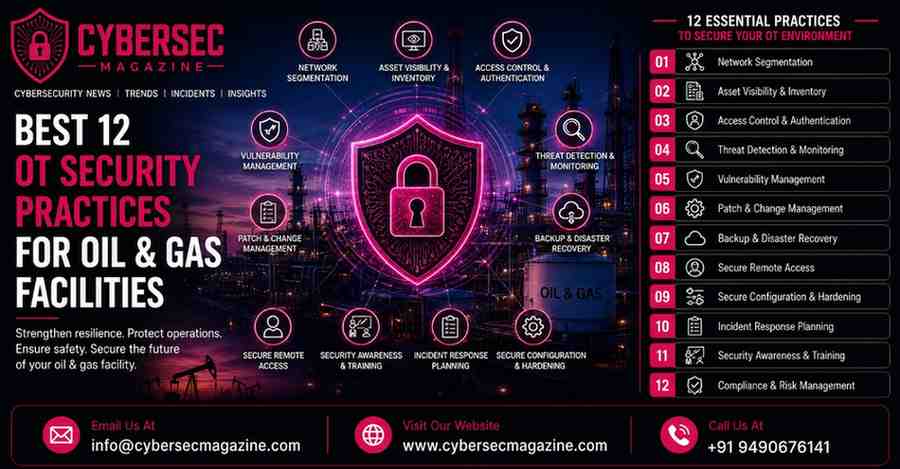
Protect your oil and gas infrastructure with 12 essential OT security practices for 2026. Learn how to secure remote, critical energy assets today.
The New Landscape of Oil & Gas Cybersecurity
Oil and gas operations have shifted from isolated, air-gapped environments to highly interconnected ecosystems. While this digital transformation enables real-time analytics across upstream, midstream, and downstream operations, it has also widened the attack surface for state-sponsored threat actors and ransomware groups. In 2026, securing these facilities requires more than just standard IT firewalls; it demands an OT-native approach that prioritizes physical safety, uptime, and the unique constraints of industrial control systems (ICS). Because oil and gas infrastructure often spans hundreds of miles-from remote wellheads to complex, densely instrumented refineries-defenders must secure a diverse range of legacy and modern assets that cannot be easily updated or patched.
1. Implement Passive Asset Discovery and Visibility
You cannot protect what you do not see. In sensitive OT environments, active scanning can inadvertently cause fragile controllers to crash, resulting in costly downtime. Instead, prioritize passive asset discovery, which monitors network traffic to identify devices, firmware versions, and communication patterns without interacting with the equipment. This approach provides a clear inventory of every PLC, HMI, and sensor, allowing your team to identify unauthorized devices or unexpected communication flows in real-time. By maintaining a continuous, accurate view of your entire network topology, you establish the foundational data necessary for all other security activities.
2. Enforce Strict Network Segmentation and Micro-perimeters
Flat network architectures are the primary enabler for lateral movement during a cyberattack. To prevent this, use micro-segmentation to break down your physical network into smaller, logical zones based on function and criticality. By implementing industrial-grade firewalls that filter traffic based on specific OT protocols like Modbus or OPC, you ensure that only approved commands reach your controllers. This “conduit” model effectively isolates critical processes, ensuring that even if a workstation in the corporate IT network is compromised, the threat remains contained and unable to reach your safety-instrumented systems.
3. Deploy Industrial-Native Network Monitoring
General-purpose IT security tools often fail to identify adversary behavior within industrial networks because they lack the necessary protocol awareness. Deploy ICS-native monitoring solutions that establish a behavioral baseline for your specific operations, noting how equipment communicates and what commands are standard. When these systems detect anomalies-such as unusual PLC programming commands or access during off-hours-they provide alerts that are relevant to OT teams. This shifts your security posture from reactive patching to proactive detection of the “kill chain” stages that precede a process disruption.
4. Adopt a Zero Trust Architecture for Remote Access
Remote access is the most frequent entry point for adversaries targeting oil and gas infrastructure. Move away from broad, “always-on” VPNs toward a Zero Trust model that grants access only to the specific machine an employee or contractor requires, and only for a limited time. This should be combined with robust Multi-Factor Authentication (MFA) that relies on hardware tokens rather than interceptable SMS codes. By ensuring that every connection is cryptographically verified and session-logged, you can strictly govern third-party maintenance activities while reducing the risks of persistent, unauthorized remote footholds.
5. Secure Transient Devices and Removable Media
USB drives and contractor laptops are common vectors for introducing malware into otherwise secure, isolated environments. Before any portable device is permitted to connect to your OT network, it must pass through a physical sanitization kiosk that scans, validates, and cleans the media. This ensures that no unauthorized files, macros, or malicious binaries are introduced to your plant floor. For high-security zones where the risk is too great, consider implementing hardware-enforced data diodes, which allow data to move out of the network for analysis while physically preventing any external data from flowing back in.
6. Centralize Identity and Access Governance
Managing access across geographically dispersed sites requires centralized governance to prevent “credential sprawl.” Implement Privileged Access Management (PAM) to tightly control and audit the use of powerful administrative accounts, ensuring that every session is recorded and requires specific sign-off. By eliminating shared credentials and enforcing named user accounts, you can pinpoint exactly who made a change to an engineering workstation or controller. This visibility is vital for compliance audits and incident investigations, ensuring that you maintain a clear, auditable trail of all privileged actions across your entire enterprise.
7. Shift to “Secure by Design” Procurement
Cybersecurity should be a condition of purchase, not an afterthought. When procuring new equipment, demand full visibility into the Software Bill of Materials (SBOMs) and require vendors to provide transparent vulnerability disclosure policies. By holding suppliers accountable for the security of their products before they are integrated into your environment, you shift security responsibility upstream. This procurement-driven approach ensures that your infrastructure is built on a foundation of validated components, reducing the burden on your team to patch or harden systems that should have been secure from the start.
8. Prioritize Vulnerability Management via Risk Context
In OT, you cannot patch every system on a “patch Tuesday” schedule without risking process stability. Instead, prioritize vulnerability remediation based on the actual operational risk-is the device critical to a safety-instrumented system, or is it a non-critical utility sensor? By correlating vulnerability data with asset criticality and network exposure, your team can focus their limited maintenance windows on the threats that pose the greatest danger. Utilize the CISA Known Exploited Vulnerabilities (KEV) catalog as a key input for your prioritization framework to ensure you are defending against active threats.
9. Establish OT-Specific Incident Response Plans
Standard IT incident response plans often fail to account for the physical safety consequences of a cyber incident in an oil and gas environment. Your IR plan must clearly define who has the authority to transition units to manual mode or initiate an emergency shutdown. It should also include pre-approved “containment” actions allowed in each zone and established paths for vendor support during an emergency. Regularly test these plans through tabletop exercises that involve both security teams and operational engineers to ensure everyone knows their roles during a crisis.
10. Harden Legacy SCADA and Endpoint Systems
Oil and gas infrastructure is filled with legacy systems-some running end-of-life operating systems like Windows XP-that cannot be patched or equipped with traditional endpoint agents. For these assets, utilize purpose-built, industrial-hardened security tools that provide “virtual patching” or application whitelisting without requiring system reboots. This allows you to extend the lifespan of critical controllers and workstations while maintaining a hardened security posture. By protecting these endpoints at the process layer, you can prevent exploitation even when the underlying software has known, unfixable vulnerabilities.
11. Implement Behavioral Baselining for Automation
Adversaries often hide their activity by mimicking legitimate administrative tasks. By deploying systems that learn the “pattern of life” for your control network, you can detect deviations that indicate malicious intent, such as an engineering workstation downloading a PLC configuration file it has never accessed before. This behavioral approach is essential for identifying sophisticated threats that bypass signature-based detection. Because this baseline is specific to your facility’s unique operational rhythm, it helps reduce “alert fatigue,” ensuring that your security team is notified only of truly anomalous and potentially dangerous activity.
12. Foster IT/OT Convergence and Shared Risk Ownership
Cybersecurity is an operational discipline, not just an IT task. Success requires a shared language between security teams, automation engineers, and facility management, emphasizing metrics that matter to them: safety, uptime, and regulatory compliance. Appoint a clear OT security owner who understands the operational constraints of the plant floor and can act as a bridge between the enterprise and the process. By aligning security initiatives with the operational goals of the facility, you gain the buy-in necessary to implement robust controls without causing friction with the teams responsible for keeping the production running.