Best 10 OT Incident Response Playbooks for Electric Grids
The Evolution of Electric Grid Incident Response: Background
For generations, electric utilities relied on physical security, manual switching, and isolated supervisory control and data acquisition (SCADA) networks to ensure uninterrupted power delivery. Today’s modern smart grid has undergone massive digital transformation, integrating distributed energy resources (DERs), automated smart meters, cloud-based analytics, and remote substation monitoring to optimize grid efficiency. However, this convergence with IT infrastructure has exposed power systems to sophisticated, state-sponsored cyber threats capable of manipulating breakers, overloading transformers, and causing widespread blackouts. Because standard enterprise IT incident response plans cannot address the physical safety demands and proprietary protocols of operational technology (OT), specialized, grid-specific playbooks are now an absolute operational necessity. Developing and practicing these targeted response frameworks ensures that transmission and distribution operators can contain breaches, protect human life, and restore power before catastrophic physical damage occurs.
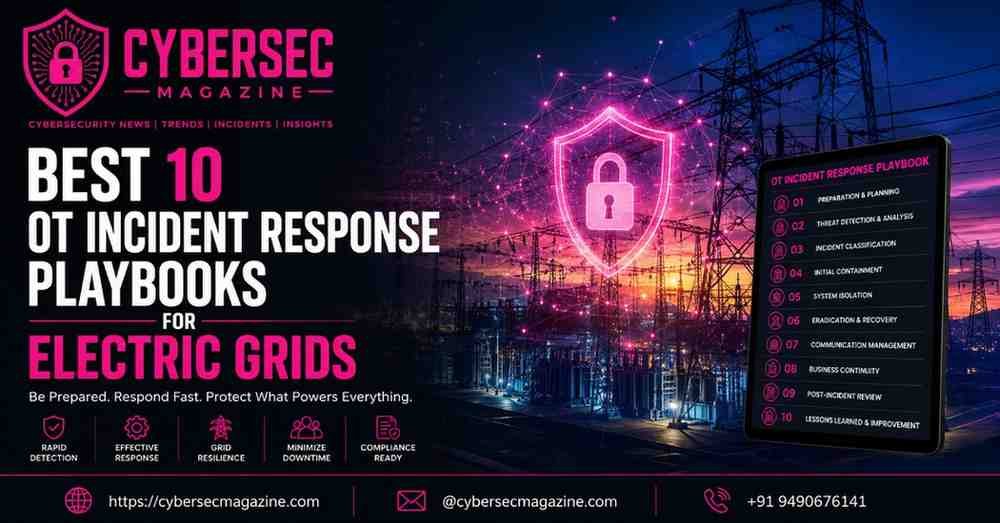
Top 10 OT Incident Response Playbooks for Electric Grids
1. Unauthorized Logic Modification on Transmission Substations
When an adversary gains unauthorized access to a substation Programmable Logic Controller (PLC) and attempts to modify relay logic or tripping thresholds, grid safety is immediately compromised. The incident response playbook for this scenario must outline immediate steps to isolate the affected controller from the master SCADA network without de-energizing critical power lines. Responders must utilize out-of-band management channels to capture volatile memory and forensic logs before freezing the controller state. Restoring safe operations requires verifying cryptographic checksums of the original firmware and deploying clean, gold-standard backup code in coordination with protection engineers.
2. SCADA Master Station Compromise and HMI Manipulation
A breach of the central SCADA master station grants threat actors a comprehensive view of the entire power grid, allowing them to spoof sensor telemetry and blind operators. This playbook focuses on rapidly identifying unauthorized user sessions, anomalous command sequences, and rogue administrative tools active within the control center. Incident responders must execute predefined containment procedures, such as severing compromised enterprise-to-SCADA bridge connections and failing over to redundant, isolated backup control rooms. Operators must immediately transition from automated remote management to localized, manual substation oversight to maintain situational awareness and prevent dangerous switching errors.
3. Compromised Third-Party Vendor Access and Remote Maintenance Tunnels
Utilities rely heavily on external contractors and equipment vendors to maintain turbines, transformers, and protection relays, creating vulnerable remote access vectors. When an alert indicates malicious activity originating from a vendor VPN tunnel, this specialized playbook is triggered to sever the connection instantly. Responders must audit vendor access logs, revoke compromised cryptographic certificates, and inspect the specific assets the vendor was contracted to service. The playbook mandates tightening just-in-time access rules and enforcing mandatory multi-factor authentication and session recording before any vendor is permitted back onto the network.
4. Distributed Energy Resource (DER) and Microgrid Infiltration
The rapid proliferation of smart solar farms, wind turbines, and battery storage systems introduces thousands of vulnerable edge nodes directly connected to the distribution grid. If threat actors compromise a microgrid aggregator, they can manipulate power injection levels to cause severe voltage fluctuations and local grid instability. This response playbook details how to isolate compromised DER clusters from the primary feeder lines using automated protective relay tripping or firewall segmentation rules. Responders must coordinate with field technicians to audit local smart inverter firmware and block unauthorized external API connections at the distribution edge.
5. Smart Metering Infrastructure (AMI) Compromise and Mass Disconnects
Advanced Metering Infrastructure (AMI) networks connect millions of smart electric meters back to utility control centers via wireless mesh networks. A sophisticated cyber attack targeting the head-end AMI system could potentially issue simultaneous disconnect commands to thousands of homes, creating localized civil emergencies. This playbook establishes protocols for freezing all automated disconnect routines, blacklisting compromised head-end server certificates, and switching the AMI network to read-only telemetry mode. Incident teams must work with telecommunications providers to locate rogue RF transceivers and secure vulnerable wireless backhaul links against further exploitation.
6. OT Demilitarized Zone (DMZ) Firewall Breach and Lateral Movement
The OT DMZ serves as the crucial staging boundary between corporate IT networks and sensitive substation control loops, making it a primary target for lateral movement. When an intrusion is detected breaching the DMZ firewall, this playbook guides security analysts in isolating the interchange zone immediately without crashing historian data flows. Responders must identify the initial entry vector, terminate compromised proxy sessions, and inspect all internal firewall rule bases for unauthorized modifications. Restoring secure DMZ integrity requires purging malicious binaries, patching underlying OS vulnerabilities, and verifying that no backdoor tunnels were established into Level 2 control zones.
7. Safety Instrumented System (SIS) and Emergency Trip Interference
Safety Instrumented Systems represent the absolute last line of defense against catastrophic physical destruction, such as catastrophic boiler explosions or massive transformer fires. Any indication of unauthorized interaction, configuration changes, or anomalous communication attempts targeting the SIS triggers an immediate, high-priority emergency playbook. Responders must verify the physical integrity of emergency shutdown loops through out-of-band hardware checks, ensuring that digital compromises have not disabled physical trip mechanisms. The playbook dictates absolute collaboration between cybersecurity analysts and senior plant safety engineers to maintain fail-safe operational readiness at all times.
8. Ransomware Deployment and Extortion on Corporate-OT Bridges
While ransomware typically targets enterprise IT file servers, modern strains specifically engineered for industrial environments can disable engineering workstations and lock supervisory control servers. This playbook outlines structured containment protocols to prevent corporate ransomware infections from crossing the Purdue Model boundary into real-time control networks. Responders must immediately disconnect shared network storage, isolate infected Windows-based HMI terminals, and evaluate the integrity of offline, immutable backups. The framework explicitly prohibits paying extortion demands, focusing instead on rapid system restoration, forensic evidence preservation, and coordination with regulatory authorities.
9. Time Synchronization and GPS Spoofing Attack on Grid Phaselock
Accurate time synchronization across distributed phasor measurement units (PMUs) and substations is vital for wide-area situational awareness and fault detection. If an adversary executes a GPS spoofing or Network Time Protocol (NTP) manipulation attack, it desynchronizes grid protection relays and blinds operators to cascading failures. This specialized playbook provides steps to detect clock drift, isolate compromised timing masters, and fail over to secondary atomic or land-based backup clocks. Restoring secure time sync ensures that sequential event recording remains reliable during complex multi-substation electrical disturbances.
10. Post-Incident Recovery, Forensics, and Grid Resurfacing
Once an active cyber incident has been contained and physical safety has been assured, the critical focus shifts to safe system recovery and forensic analysis. This comprehensive playbook guides utilities through the meticulous process of scrubbing compromised controllers, reinstalling verified firmware, and rebuilding network perimeters. Responders must preserve cryptographic evidence and system memory dumps to support law enforcement and regulatory investigations, such as NERC CIP compliance reviews. Finally, the playbook dictates a structured, phased restoration of grid operations, bringing substations and generation units back online under heightened monitoring to ensure absolute stability.
Conclusion: Ensuring Long-Term Grid Resilience
As the electric grid continues to modernize and embrace digital interconnectivity, the threat landscape facing power producers grows increasingly sophisticated. Relying on reactive troubleshooting or generic enterprise IT incident response plans leaves critical infrastructure vulnerable to catastrophic blackouts and physical destruction. By implementing and regularly practicing grid-specific OT incident response playbooks-covering everything from substation PLC tampering to smart meter compromise-utilities can safeguard their operations. Evaluate your organization’s emergency readiness, test your inter-departmental communication channels, and refine your incident response frameworks today to ensure a secure and resilient energy future.