The Rise of Ransomware-as-a-Service: What Enterprises Must Do
Ransomware has evolved from opportunistic malware to an industrialized crimeware ecosystem. In 2025, the explosive rise of Ransomware-as-a-Service (RaaS) has fundamentally shifted how cybercriminals operate and how enterprises must defend themselves. More than ever, defenders in OT/ICS and IT environments face relentless attacks that combine automation, specialization, and criminal enterprise-level collaboration. This blog explores the new reality of RaaS, analyzes its impact, and details what organizations must do to stay secure.
What Is Ransomware-as-a-Service?
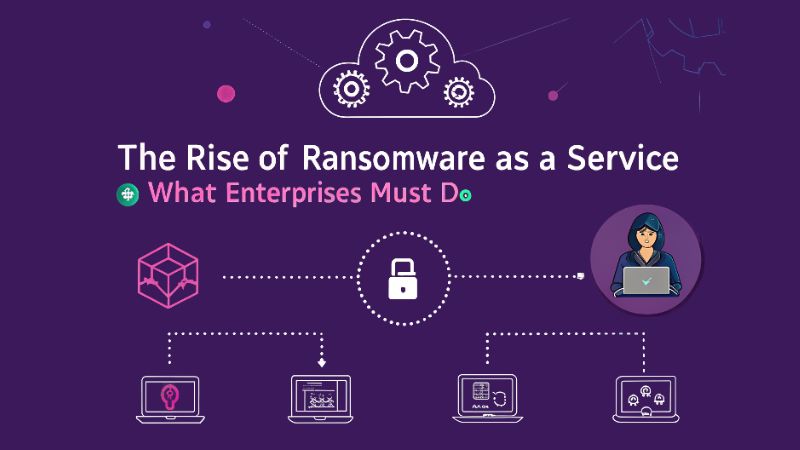
Ransomware-as-a-Service is a business model in which cybercriminals develop sophisticated ransomware toolkits and sell or lease them to affiliates, who then launch attacks against victims. The RaaS operator provides code, infrastructure, and even customer support; affiliates pay a fee or a share of ransoms. This model lowers the technical barrier to entry, allowing anyone-regardless of skill level-to execute advanced ransomware campaigns.
Why RaaS Is Booming in 2025
RaaS has become the dominant force in global cyber extortion due to several trends:
- Low Technical Barriers: Turnkey solutions allow non-technical criminals to operate ransomware campaigns quickly.
- Professionalization: Groups now offer support desks, leak sites, and negotiation services, improving reliability for affiliates.
- Increased Accessibility: The dark web hosts dozens of RaaS platforms, often with subscription packages or performance bonuses.
- Rapid Innovation: Frequent updates introduce new evasion techniques, zero-day exploits, and automated lateral movement capabilities.
How RaaS Attacks Are Different
Unlike smaller, isolated ransomware attacks of the past, RaaS attacks are coordinated, aggressive, and capable of targeting multiple organizations simultaneously. Key distinguishing features include:
- Automated Reconnaissance: Scanning networks for vulnerabilities, privileged accounts, and connected systems.
- Multi-Vector Intrusion: Attacks may start through phishing, software vulnerabilities, or compromised credentials.
- Modular Extortion: Threat actors may encrypt files, steal confidential data, and threaten exposure-even as part of the same attack cycle.
The operational scale of RaaS allows attackers to blend techniques, customizing tactics for OT, ICS, and IT targets.
The OT/ICS Impact: What’s Changed?
IT/OT Convergence and Ransomware
Industrial targets have become prime prey as OT environments-such as manufacturing, utilities, or energy-converge with IT for operational efficiency. The compromise of sensitive control systems, often through the IT network, leads to operational outages, equipment damage, and severe safety risks. In 2025, over 70% of OT professionals report direct impacts from ransomware, with half facing operational shutdowns and critical business interruption.
Double Extortion Hits Industrial Networks
Modern RaaS groups employ double (or even triple) extortion: not only encrypting networks but also stealing sensitive business and industrial data, threatening public exposure or regulatory fines to pressure payment. Industrial control systems and IoT assets, once seen as too niche to attack, are routinely targeted due to poor segmentation and legacy vulnerabilities.
Anatomy of a RaaS Attack
A typical attack involves several phases:
- Initial Access: Phishing, exploitation, remote access trojans, or compromised third-party accounts.
- Reconnaissance: Automated tools scan for valuable assets, weak points, and lateral movement paths across OT/IT boundaries.
- Privilege Escalation: Gaining admin rights to deploy ransomware broadly and maximize disruption.
- Payload Delivery: Encrypting systems, stealing key data, and deploying tools for remote control.
- Extortion: Demanding ransom via leak sites, direct negotiation portals, or threats of public shaming.
- Post-Incident Operations: Attackers may remain in networks to re-attack or sell access to other actors.
Why Enterprises Are Vulnerable
Common Weaknesses
- Flat Network Architecture: Poor segmentation lets ransomware move laterally, crossing from IT into OT/ICS environments with ease.
- Legacy Devices: Outdated industrial controllers and IoT devices often lack robust security controls, making them prime targets.
- Insufficient Monitoring: Weak visibility and lack of anomaly detection allow attacks to unfold unnoticed.
- Cultural Gaps: IT and OT teams operate in silos, failing to coordinate security response or risk management.
What Enterprises Must Do: The Cybersecurity Playbook
Protecting against RaaS demands a holistic, multi-layered strategy tailored for the realities of 2025. Here’s what leading organizations are doing:
1. Strengthen Network Segmentation
Segment critical assets into isolated, high-security zones, using firewalls, access control lists, and purpose-built OT security appliances. Deploy DMZs and microsegmentation strategies to minimize lateral movement inside OT/ICS networks.
2. Adopt Zero Trust for OT/IT
Move beyond trusted internal networks-verify and validate every user, device, and connection. Apply least privilege across all systems and enforce continuous monitoring and threat hunting for both east-west and north-south traffic.
3. Visualize and Inventory Everything
Build comprehensive maps of network topology, asset inventories, and traffic flows. Use automated tools for asset discovery, identifying shadow OT devices and unauthorized connections. This is the foundation for proper segmentation and incident response.
4. Limit Third-Party and Remote Access
Restrict external access points, especially for remote vendors and partners, with strong authentication, authorization, and monitoring. Consider unidirectional gateways or data diodes for critical process control zones.
5. Implement Continuous Monitoring and Incident Response
Deploy advanced SIEM, anomaly detection, and threat intelligence feeds. Monitor all traffic between network segments and set automated alerts for suspicious lateral movement or privilege escalation attempts.
6. Patch Management and Vulnerability Reduction
Update OT, ICS, and IoT devices with the latest security patches where feasible. For legacy systems, isolate in protected segments and plan for phased upgrades.
7. Train, Simulate & Collaborate
Educate both IT and OT staff on modern ransomware threats, run simulation exercises, and develop unified playbooks for cross-team incident response.
Regulatory Pressure and Compliance
Governments and industry bodies have intensified compliance requirements for critical infrastructure and industrial cybersecurity in response to ransomware’s threat. Standards like NERC CIP (Power) and IEC 62443 (Industrial Automation) now demand network segmentation, asset inventories, and incident response plans not just for compliance, but as a baseline for business resilience.
The Future: AI, Dynamic Segmentation, and Defensive Innovation
The next phase is adaptive defense-using artificial intelligence and orchestration tools to dynamically map, segment, and protect assets in real time. Enterprises are moving toward policy-based controls, identity-driven segmentation, and integrated deception technologies (such as honeytokens and decoy segments) to enhance visibility and hinder attackers.
Conclusion
Ransomware-as-a-Service is no longer a distant possibility-it is today’s reality. Enterprises, especially those operating complex OT/ICS environments, cannot afford complacency or outdated strategies. By prioritizing robust segmentation, zero trust, continuous monitoring, and cultural alignment across IT and OT, organizations can outpace attackers and secure their operations.
The time to act is now. Defenders must adapt just as rapidly as adversaries, treat ransomware as a board-level risk, and invest in resilient architecture. With a disciplined, innovative approach, enterprises can turn the tide against RaaS and safeguard critical infrastructure for the future.