
Endpoint Security: Best Practices for 2025
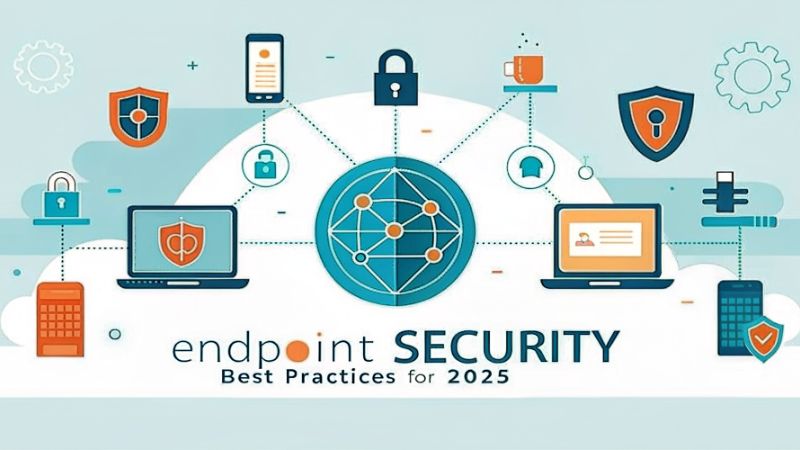
In a world where enterprises, industrial control systems (ICS) and IIoT networks are more interconnected than ever, endpoints have become both critical assets and high‑value targets. Devices like laptops, mobile phones, OT workstations, field engineering consoles and smart sensors now form the front line of every cybersecurity defence.
Yet the endpoint security landscape in 2025 looks very different from a decade ago. The volume and diversity of endpoints has exploded; hybrid and remote work have blurred boundaries; adversaries are using AI and automation; and industrial/OT systems add another layer of complexity with safety, availability and legacy‑device constraints.
In this article for CyberSec Magazine, we’ll provide a clear, structured guide to endpoint security in 2025 – why it matters, what’s changed, what you must do, and how to build and maintain an effective endpoint strategy that spans IT, OT & IoT.
1. Why Endpoint Security Is More Critical Than Ever
The Changing Endpoint Attack Surface
Endpoints used to mean desktops and laptops – now they include mobile devices, BYOD, smart sensors, IIoT gateways, control‑system HMIs, field engineer tablets and more. Each is potentially an entry point. For example, a recent report found 68 % of organizations in the US experienced at least one endpoint‑related attack.
Hybrid Work, Remote Access & IoT Increase Risk
With remote and hybrid work firmly in place, many endpoints connect from insecure networks, home Wi‑Fi or public hotspots – increasing exposure. At the same time, OT/ICS networks are no longer air‑gapped and link to IT systems and cloud platforms, meaning an endpoint breach in IT can cascade into OT.
Evolving Threats & Attack Techniques
Cyber‑attackers are leveraging AI, machine‑learning driven reconnaissance, zero‑day exploits and sophisticated lateral movement techniques. Endpoint protections based on signatures alone no longer suffice.
OT/ICS Endpoints Carry Unique Constraints
In industrial networks, many endpoints (PLCs, HMIs, sensors) were built with availability and safety in mind, not security. They may lack modern agents, patching may be difficult, and disruptions can have physical consequences.
Given these realities, endpoint security in 2025 requires a new mindset – layered, adaptive, contextual and spanning IT/OT/IoT.
2. What Does “Endpoint Security” Mean in 2025?
Endpoint security refers to the practices, technologies and policies that protect device‑level access, ensure device integrity, detect compromise and enable response. In 2025, key characteristics include:
- Device visibility & inventory: Knowing all endpoints – including unmanaged, IoT, IIoT and legacy OT devices.
- Device posture & compliance: Ensuring devices meet security requirements (encryption, patches, agents, configuration) before granting network access.
- Prevention + detection + response: Traditional 防 malware/antivirus (prevention) paired with EDR/XDR capabilities, anomaly detection and automated response.
- Contextual control & segmentation: Recognising device identity, user identity, location, network context and enforcing least‑privilege access.
- Holistic coverage across IT, OT and IoT: Endpoint security must include industrial/OT endpoints, remote field devices and smart sensors-not just PCs.
- Adaptive & AI‑driven capabilities: Because threats evolve rapidly, endpoint security must evolve too – using machine‑learning, behaviour‑based detection and automated threat response.
In short: endpoint security in 2025 is not just about installing antivirus-it’s about visibility → control → detection → response, across all device types, in all locations.
3. Key Best Practices for Endpoint Security in 2025
Here are the most important practices you should adopt today – many of which align with recent guidance and are tailored for hybrid IT/OT/IoT environments.
3.1 Maintain a Complete Endpoint Inventory
- Use tools that automatically discover and classify endpoints-including unmanaged devices, IoT/IIoT sensors and OT endpoints.
- Maintain metadata: owner/user, device type, OS version, security agent version, patch status, network segment, business criticality.
- Update inventory continuously to reflect changes (new devices, contractors, field network additions).
- SentinelOne emphasises “identify endpoints” as the first of 15 endpoint‑best‑practices for 2025.
3.2 Enforce Device Posture and Access Management
- Apply device posture checks before granting network access: verify device is enrolled, protected, patched and compliant.
- Implement zero‑trust principles: assume breach, verify user + device + context before access.
- Use Multi‑Factor Authentication (MFA) for all access, including field and OT access points.
- Implement least‑privilege access: devices and users only have the rights needed to perform tasks.
3.3 Patch, Update and Harden Devices
- Automate patch deployment where possible. Prioritise critical vulnerabilities and devices that interface with networks.
- For OT/ICS endpoints where patching is difficult, use compensating controls (network isolation, virtual patching, monitoring).
- Harden device configuration: disable unused services, secure default credentials, enable encryption, apply firmware updates.
- Monitor endpoints for configuration drift (devices falling out of compliance) and remediate quickly.
3.4 Deploy Endpoint Detection & Response (EDR/XDR)
- Use EDR agents on devices where possible to collect telemetry (processes, network connections, logs).
- For unmanaged/legacy endpoints (especially in OT/IoT), use network‑based monitoring or passive agents.
- Integrate endpoint telemetry into centralized detection systems-SIEM, XDR, SOC workflows-for unified visibility.
- Leverage behaviour‑based detection and AI model anomalies rather than reliance solely on signatures.
3.5 Segment Networks & Apply Micro‑Segmentation
- Segment endpoints by role, risk and function-e.g., field engineer laptop, HMI workstation, office PC, IIoT gateway.
- Apply micro‑segmentation so that if an endpoint is compromised, lateral movement is limited.
- Ensure that OT/ICS endpoints are on separate segments with strict access controls and monitoring – reducing blast radius.
3.6 Secure IoT/IIoT & Remote/Field Endpoints
- Recognise that many endpoints today are IoT/IIoT devices with limited security capabilities – design controls accordingly.
- Use device‑identity, network access control (NAC) and segmentation for these devices.
- For remote/field endpoints (mobile devices, engineering laptops), enforce: encrypted connectivity, endpoint protection, secure VPN or ZTNA access, and logging of remote sessions.
- Monitor for unusual behaviour on field devices (unexpected connections, unusual data flows, device firmware anomalies).
3.7 Continuous Monitoring, Analytics & Threat Response
- Monitor endpoint activity in real time: process execution, new device registration, anomalous network connections, unusual geographic or time‑based access.
- Use machine‑learning/behaviour analytics to identify deviations from baseline device behaviour.
- Automate response where possible: isolate suspect device, block user login, trigger incident workflow.
- Maintain endpoint logs, audit trails and integrate with broader security operations (SOC).
3.8 Device and User Awareness & Training
- Regularly train staff (including field/OT staff) about endpoint risks: phishing, social engineering, unsecured networks, mobile device usage.
- Focus on behaviours: e.g., how to use employee devices securely, how to report suspicious activity, how to secure mobile/remote endpoints.
- Develop clear policies: BYOD, device usage, remote/field access, software installation, mobile device security.
3.9 Review, Audit and Continuously Improve
- Define Key Performance Indicators (KPIs): e.g., number of endpoints discovered, number of non‑compliant devices, mean time to isolate compromised endpoint, number of detected anomalies.
- Conduct regular endpoint audits: verify agent coverage, patch coverage, segmentation adherence.
- Update policies as threat landscape evolves (e.g., bring in AI‑driven threats, nation‑state campaigns targeting endpoints) – ICS/OT predictions for 2025 emphasise new adversarial sophistication.
4. Endpoint Security in IT vs OT/ICS Environments
It’s important to recognise the differences in approach when the endpoint sits within an IT domain versus an OT/ICS domain.
IT Endpoints
- Laptops, desktops, mobile devices, servers, virtual machines.
- Vendor‑supported OS patches, antivirus, EDR agents, remote access tools.
- Easier to enforce standard security controls.
- Endpoint risk often centres on data breach, credential theft, ransomware.
OT/ICS Endpoints
- HMIs, engineering workstations, PLCs, RTUs, IIoT gateways, sensors.
- Often legacy systems, proprietary protocols, limited patch windows, safety/availability constraints.
- Endpoint risk includes not just data breach but operational impact: production downtime, safety incidents, equipment damage.
- Agent installation may be impossible or disruptive-monitoring may require passive techniques.
- Control‑system traffic and commands must be interpreted in context (process variables, timing, set‑points) not just network flows.
What This Means for Endpoint Security Strategy
- In OT/ICS contexts you may need compensating controls: network isolation, passive monitoring, micro‑segmentation, virtual patching.
- Endpoint security must be integrated with OT network visibility, asset inventory and operations team collaboration.
- Policies need to reflect operational constraints: e.g., maintenance windows, device availability, risk tolerance.
- Visibility of endpoint behaviour is crucial: unknown devices connecting to control network represent major risk.
5. Emerging Trends Shaping Endpoint Security in 2025
Looking ahead, several developments deserve attention:
- AI/ML‑driven endpoint protection: Endpoint solutions increasingly incorporate machine‑learning models to detect zero‑day threats, behaviour anomalies and predictive risk.
- Cloud‑native endpoint protection & EDR/XDR convergence: With remote work and cloud services expanding, endpoint security must integrate with cloud workload protection and unified detection/response platforms.
- Zero‑Trust applied to endpoints: “Never trust, always verify” becomes pervasive – continuously verifying device identity, posture and behaviour before access.
- Endpoint security for IoT/IIoT: With more sensors and smart devices, endpoint strategies must extend beyond traditional PCs. IoT devices often need lightweight monitoring, segmentation and identity controls.
- Hybrid IT/OT endpoint strategies: Convergence means endpoint security must span IT and OT domains, ensuring consistent controls regardless of device type or location.
- Quantum & post‑quantum threats: While still emerging, some critical infrastructure forecasts point to “steal‑now, decrypt‑later” threats and the need to protect endpoints and data accordingly.
6. Common Pitfalls and How to Avoid Them
Even the best‑intentioned endpoint security programs can fail if common mistakes are made. Here are some pitfalls and remedies:
- Incomplete visibility of endpoints: Failing to discover unmanaged, shadow or IoT/IIoT endpoints leaves major blind spots. Remedy: implement continuous discovery and profiling.
- Relying purely on signature‑based protection: Traditional AV is insufficient for modern threats. Remedy: extend with EDR, behaviour‑based detection and anomaly analytics.
- Uniform controls across all devices: not all endpoints are equal; OT devices may require different controls than PCs. Remedy: classify endpoints and apply appropriate control tiers.
- Neglecting remote/field/third‑party endpoints: Many breaches start via remote access or vendor devices. Remedy: apply posture checks, remote session monitoring, jump hosts and segmentation.
- Ignoring device drift and configuration changes: Endpoint compliance can erode over time. Remedy: monitor configuration drift, automate compliance checks and enforce remediation.
- Lack of integration between endpoint security tools and broader security operations: Endpoint alerts that don’t feed into SOC workflows will be ignored. Remedy: integrate endpoint telemetry into SIEM/XDR and maintain response processes.
- Not accounting for OT/ICS constraints: Applying typical IT controls to OT endpoints without modifications risks downtime or safety incidents. Remedy: tailor controls, collaborate with OT engineering and use passive monitoring when needed.
7. Getting Started: Practical Steps for Your Endpoint Security Program
Here is a suggested roadmap to build or enhance your endpoint security program, especially relevant for 2025:
- Asset & Endpoint Discovery
- Perform a network‑wide scan/discovery to identify all endpoints (IT/OT/IoT).
- Classify endpoints by type, risk, business criticality and location.
- Define Device Posture & Access Policies
- Define what constitutes a “trusted” endpoint (agent installed, compliant OS, encryption enabled).
- Define access policies: which users/devices can access which systems and under what conditions.
- Deploy Endpoint Protection Stack
- Ensure all PCs/servers have EPP + EDR solutions installed and configured.
- For OT/IoT/legacy endpoints, implement compensating controls: NAC, segmentation, passive monitoring.
- Hardening, Patching & Configuration Management
- Create baseline configurations for endpoint types; disable unnecessary services, enforce encryption, secure credentials.
- Automate patching schedule; prioritise critical vulnerabilities.
- For OT endpoints, schedule maintenance windows and use network isolation if direct patching is not feasible.
- Network Segmentation & Micro‑Segmentation
- Segment networks by device role and risk.
- For endpoints, apply least‑privilege network access: only necessary connections allowed.
- Monitor isolated micro‑segments for lateral movement or unusual traffic.
- Monitoring, Detection & Response
- Collect endpoint telemetry (processes, connections, logs) and network flow data.
- Use analytics/ML to detect anomalies and enable automated or semi‑automated response (e.g., isolate device).
- Integrate endpoint events with SOC workflows for investigation and remediation.
- Training, Policies & Governance
- Develop endpoint security policies (BYOD, remote access, mobile devices, IoT).
- Conduct regular awareness training for users, field/OT staff, contractors.
- Define roles & responsibilities: IT, OT security, operations engineering and vendors.
- Measure, Review & Improve Continuously
- Define KPI’s: % endpoints with agent installed, % endpoints compliant, mean time to isolate compromised endpoint, number of detected endpoint incidents.
- Conduct regular audits and reviews of endpoint program.
- Update policies and controls in response to threat intelligence, emerging technologies and business changes.
8. Key Takeaways
- Endpoints are the new front line-and in 2025 they span IT, OT and IoT environments.
- Visibility, posture enforcement, segmentation, behavioural detection and response capabilities are all critical.
- Traditional antivirus alone is no longer sufficient; a layered, AI‑enabled and zero‑trust aligned approach is required.
- OT/ICS endpoints add complexity-legacy devices, safety/availability constraints, limited patching windows-so tailor your strategy accordingly.
- Remote work, BYOD, field/engineering laptops and IIoT gateways all increase the endpoint risk surface.
- Programs must evolve continuously with the threat landscape: integrate analytics, adapt policies, monitor drift, and measure progress.
Conclusion
In the modern cyber‑resilience landscape, endpoint security has evolved from a checkbox to a strategic pillar. Whether your organisation primarily deals with enterprise IT, industrial control systems, IIoT devices or a mix, a robust endpoint security strategy in 2025 means more than installing antivirus software. It means designing for visibility, control, detection and response across every type of device, location and scenario.
At CyberSec Magazine, we believe that endpoint security is where cyber defence meets operational resilience. If you’re ready to assess your endpoint security maturity, design device‑type‑specific controls, or build the policies and processes that span IT and OT, we’re here to help guide you.