Top 10 OT Visibility Tools for Ports & Maritime Infrastructure
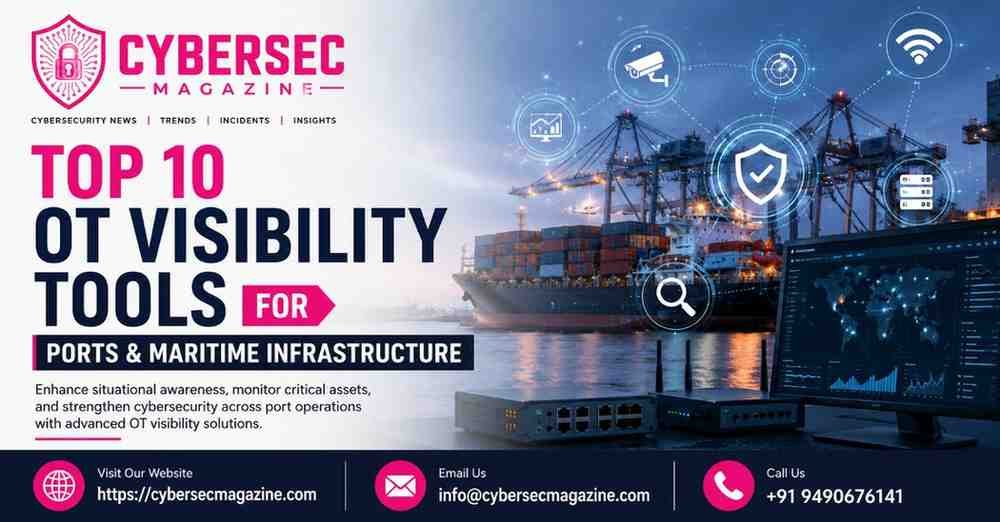
Discover the top 10 OT visibility tools for ports and maritime infrastructure. Learn how advanced asset discovery protects vessels and terminals.
The Evolution of Maritime Cybersecurity and Operational Technology
The global maritime supply chain functions as an intricate, highly interdependent digital and physical ecosystem, where ports, terminals, and vessels rely heavily on interconnected Operational Technology (OT) and Industrial Control Systems (ICS). Historically, maritime infrastructure operated in an isolated environment, utilizing proprietary, closed-loop networks that were physically separated from corporate enterprise IT networks. These legacy architectures were designed exclusively for uptime, safety, and continuous mechanical performance rather than data protection or resilience against cyber threats. However, aggressive digital transformation initiatives, the integration of the Internet of Things (IoT), automated container handling equipment, and the necessity for real-time data exchange between ship and shore have completely erased the traditional air gap. Modern ports now function like smart cities, running complex computerized logistics platforms, automated guided vehicles (AGVs), and smart crane systems that are vulnerable to external vectors.
This convergence of IT and OT environments has introduced severe cybersecurity vulnerabilities across global maritime operations, transforming cargo terminals and vessels into lucrative targets for cybercriminals and state-sponsored threat actors. Incidents involving ransomware, unauthorized access, and disruption of port management systems demonstrate that a compromise in the cyber domain immediately translates into catastrophic physical bottlenecks, supply chain paralysis, and massive economic losses. Unlike standard corporate enterprise networks, maritime OT environments feature specialized legacy protocols, continuous 24/7 operating cycles, and zero tolerance for unexpected reboots or system downtime. Consequently, traditional IT network monitoring tools are ineffective and dangerous when deployed inside industrial marine environments, as active vulnerability scans can easily crash delicate Programmable Logic Controllers (PLCs) and marine navigation sensors.
To combat these evolving threats, maritime operators and port authorities are aggressively deploying specialized Operational Technology (OT) visibility and asset discovery tools. These platforms leverage passive monitoring techniques to map complex industrial networks, identify unmanaged connected devices, establish behavioral baselines, and detect anomalies without disrupting live operations. Achieving absolute visibility across both shore-side terminal facilities and onboard vessel control systems is the foundational prerequisite for effective industrial cybersecurity. By moving away from static compliance binders toward real-time telemetry and continuous threat intelligence, maritime organizations can secure their critical cyber-physical systems, maintain compliance with international maritime regulations like IMO 2021, and safeguard global trade corridors against sophisticated digital intrusions.
Top 10 OT Visibility Tools for Ports & Maritime Infrastructure
1. CyberOwl Medulla
CyberOwl Medulla stands out as a pioneering platform specifically built around remote operational assets, maritime vessels, and shore-side port environments rather than generic land-based manufacturing floors. Its core architecture focuses heavily on providing granular visibility into onboard ship systems, active management of mixed IT, IoT, and OT cyber risks, and robust compliance support that helps shore teams evaluate security posture across an entire fleet. The platform excels by bridging the operational gap between isolated vessel networks and centralized corporate oversight, enabling fleet managers to track cyber hygiene metrics efficiently. By translating complex technical telemetry into actionable maritime insights, security teams can easily verify whether security controls are functioning correctly during audits or port state control inspections.
Deploying a specialized monitoring tool within maritime environments requires an intimate understanding of intermittent satellite communications, limited bandwidth at sea, and rugged operational constraints. CyberOwl addresses these unique challenges by optimizing data collection and processing locally on vessels while feeding critical risk summaries back to shore-side dashboards. The tool continuously tracks asset inventory changes, configuration drifts, and anomalous behavior across navigation systems, ballast water controls, and cargo management networks. This maritime-native design ensures that shipmasters and shore-based chief information security officers share a single source of truth, drastically reducing response times when potential digital anomalies threaten vessel safety or cargo handling operations at port.
2. Nozomi Networks Guardian
Nozomi Networks Guardian has established itself as an industry-standard platform for deep industrial visibility, advanced threat detection, and continuous monitoring across complex critical infrastructure sectors, including maritime ports and marine terminals. Guardian provides automated, passive asset discovery that maps every tier of the industrial control network, identifying PLCs, RTUs, intelligent electronic devices (IEDs), and marine-specific automation hardware without impacting network performance. By leveraging advanced machine learning and behavioral analysis engines, the platform instantly recognizes unauthorized device connections, lateral movement, and protocol anomalies that typically signal an active intrusion or a compromised vendor laptop plugged into the port control network.
In busy port environments where container cranes, automated stacking systems, and marine telemetry streams intersect, scalability and speed of detection are paramount. Nozomi Networks addresses this by offering flexible deployment options across hardware sensors, virtual appliances, and cloud-integrated architectures, allowing port authorities to centralize visibility across multiple terminal operators. The platform’s deep packet inspection (DPI) engine understands a vast array of proprietary industrial and maritime communication protocols, decoding complex traffic to provide engineers with rich contextual insights. Furthermore, its integration capabilities allow security operations centers (SOCs) to correlate OT alerts with enterprise security information and event management (SIEM) tools, ensuring a unified defense posture for port infrastructure.
3. Claroty xDome for Cyber-Physical Systems
Claroty xDome delivers comprehensive protection tailored specifically for cyber-physical systems, making it a critical asset for safeguarding the converged IT-OT-IoT ecosystems found within modern container ports and marine logistics hubs. The platform utilizes a combination of passive network monitoring, secure asset queries, and edge-based collection methods to discover and profile every connected asset across complex port facilities. Whether it is environmental monitoring sensors on cold-chain reefer containers, automated gate-access control systems, or SCADA servers managing dockside power grids, xDome builds an accurate inventory enriched with critical operational context. This ensures that engineering and security teams understand precisely how digital devices map to physical terminal processes.
A major challenge in port security is managing vulnerabilities across legacy industrial hardware that cannot be easily patched or taken offline for maintenance. Claroty xDome addresses this limitation by providing prioritized vulnerability management and risk assessment, helping operators focus remediation efforts on vulnerabilities that pose an immediate exploit risk to port operations. The platform also offers robust network segmentation analysis, allowing security architects to design robust zones and conduits that prevent malware from spreading between enterprise administrative networks and safety-critical operational environments. Through seamless integration with identity providers and ticketing workflows, xDome streamlines incident response and empowers port operators to maintain continuous regulatory compliance.
4. Dragos Platform
The Dragos Platform is engineered specifically for industrial cybersecurity, offering unmatched depth in threat intelligence, vulnerability analysis, and incident response tailored for complex operational environments like maritime shipping lines and automated port terminals. Dragos combines passive network visibility with specialized threat analytics designed by elite industrial hunters who understand the unique tactics, techniques, and procedures (TTPs) used by threat actors targeting critical infrastructure. The platform automatically classifies industrial assets, tracks firmware versions, maps communications, and identifies hidden connections or unauthorized remote access channels often abused by third-party maritime vendors and contractors during routine vessel maintenance at dock.
For maritime operators managing high-stakes environments where an operational outage can cost millions of dollars per hour, the Dragos Platform provides actionable intelligence that reduces false positives and focuses attention on verified threats. Its proprietary Neighbor Watch and protocol analysis engines detect subtle deviations in industrial process behavior, alerting operators to potential manipulation of port logistics workflows or crane automation software long before physical damage occurs. Additionally, the platform is backed by world-class threat intelligence services, giving port security teams early warnings regarding emerging malware strains specifically designed to target supply chain nodes, transportation systems, and industrial control architectures globally.
5. Armis Centrix for OT/IoT Security
Armis Centrix provides a powerful, agentless asset intelligence and security platform that delivers comprehensive visibility across enterprise IT, cloud, IoT, and operational technology environments found throughout modern maritime ecosystems. Because ports manage a massive sprawl of unmanaged devices-ranging from smart handheld barcode scanners used by dockworkers to connected navigational aids and security cameras-traditional endpoint security agents cannot be installed on these specialized or legacy units. Armis overcomes this challenge by continuously analyzing raw network traffic and device state characteristics passively, building a real-time inventory and calculating risk scores without disrupting business-critical port operations.
The platform excels at identifying shadow OT and rogue IoT devices that slip past traditional procurement channels, mapping out every connection to uncover potential pathways for attackers to pivot from enterprise business networks into operational infrastructure. Armis Centrix continuously monitors device behavior against established baselines, identifying anomalous activities, policy violations, and unpatched vulnerabilities. By integrating threat intelligence feeds with automated exposure management, the platform helps port security teams visualize their entire digital attack surface. This unified visibility enables fast remediation planning, robust network segmentation enforcement, and streamlined compliance tracking across multi-terminal maritime operations.
6. Ordr Systems Control
Ordr Systems Control offers an advanced, automated platform designed to discover, classify, and secure every connected device across complex critical infrastructure environments, providing exceptional utility for port facilities and maritime logistics hubs. Utilizing sophisticated machine learning models built over years of deep device profiling, Ordr maps out intricate relationships between IT systems, IoT gadgets, and legacy OT machinery within 48 hours of initial deployment, requiring zero active scanning or software agents. This rapid time-to-value is crucial for maritime operators who need immediate visibility into dynamic port environments where ships dock, offload, and depart on tight schedules.
In addition to passive asset discovery, Ordr stands out for its ability to translate deep device intelligence directly into actionable security enforcement workflows. The platform automatically generates granular micro-segmentation policies, simulating policy changes in a virtual environment to verify that security rules will not inadvertently disrupt critical port operations or automated cargo-handling equipment. Ordr continuously monitors real-time network behavior to detect active threats, unauthorized communications, and compliance violations, empowering maritime security teams to isolate compromised devices instantly and maintain operational integrity across busy terminal facilities.
7. Cisco Cyber Vision
Cisco Cyber Vision is a purpose-built industrial cybersecurity solution embedded directly into Cisco’s robust networking portfolio, making it an ideal choice for maritime ports and shipping companies heavily invested in industrial networking infrastructure. By leveraging industrial switches and routers deployed across port terminals and onboard modern vessels as embedded sensors, Cyber Vision captures deep packet telemetry without requiring the installation of dedicated span ports or complex out-of-band monitoring appliances. This architecture drastically simplifies deployment complexity, allowing port network administrators to gain comprehensive visibility into ICS protocols, PLCs, and SCADA devices directly from existing network hardware.
The platform automatically builds dynamic asset inventories, maps industrial communication patterns, and assesses vulnerabilities against known industrial database records. Cisco Cyber Vision identifies security risks, policy violations, and anomalous behavior in real time, alerting operations teams before minor issues escalate into major disruptions. Furthermore, by integrating closely with Cisco’s broader security ecosystem-such as secure access service edge (SASE) and firewall architectures-the platform enables organizations to enforce robust security zones, implement effective network segmentation, and secure remote vendor access across dispersed port facilities seamlessly.
8. Tenable OT Security
Tenable OT Security provides deep visibility, vulnerability management, and threat detection specifically designed for industrial control systems and operational technology environments, empowering maritime operators to secure their critical assets effectively. The platform combines active querying methods designed specifically for resilient industrial hardware with passive monitoring techniques to discover every asset across port terminals and vessel networks. Tenable OT Security provides a unified view of both IT and OT convergence points, allowing security teams to identify vulnerabilities, track configuration changes, and evaluate risk posture across complex cyber-physical systems from a single dashboard.
Managing risk in maritime environments requires clear visibility into how software flaws and misconfigurations affect physical operational processes. Tenable OT Security translates technical asset data into clear business and operational risk metrics, helping port managers prioritize remediation tasks based on potential impact to safety and uptime. The platform monitors network traffic continuously for unauthorized access attempts, protocol misuse, and anomalous behavior, ensuring that security analysts receive immediate notifications of suspicious activity. By streamlining compliance reporting and integrating with enterprise incident response workflows, Tenable helps maritime organizations maintain a resilient security posture against sophisticated cyber threats.
9. Forescout Continuum Platform
The Forescout Continuum Platform delivers continuous, automated asset discovery, governance, and compliance across diverse enterprise IT, IoT, and operational technology landscapes, making it highly effective for securing modern smart ports and maritime supply chains. Forescout provides comprehensive visibility by passively monitoring network traffic and actively querying devices where appropriate, identifying every connected endpoint from office workstations and terminal management servers down to specialized marine sensors and industrial controllers. This uncompromised visibility ensures that port authorities maintain an accurate, real-time inventory of all digital assets operating within their jurisdiction.
Forescout’s core strength lies in its powerful policy engine, which automatically assesses device posture and enforces dynamic segmentation rules to contain threats the moment they appear. If an unauthorized device or a compromised vessel management system attempts to connect to the port network, Forescout can automatically quarantine the asset or restrict its movement, preventing lateral propagation across critical industrial zones. The platform integrates seamlessly with a wide array of third-party security tools, enabling maritime organizations to orchestrate automated incident response, streamline compliance audits, and protect their vital logistics infrastructure from disruptive cyber attacks.
10. Palo Alto Networks IoT Security
Palo Alto Networks IoT Security leverages advanced cloud-delivered machine learning and deep packet inspection to provide comprehensive asset discovery and threat protection for operational technology environments, including maritime ports and logistics centers. By utilizing existing next-generation firewall infrastructure or dedicated lightweight collectors, the platform automatically discovers and classifies all connected OT and IoT devices, analyzing their behavioral patterns to establish accurate baselines. This approach eliminates blind spots across port facilities, ensuring that security teams have complete visibility into unmanaged industrial assets and legacy controllers.
The platform provides robust threat prevention capabilities, identifying known and unknown vulnerabilities, malware, and anomalous network behaviors before they can be weaponized against critical port infrastructure. Palo Alto Networks IoT Security correlates device context with threat intelligence to deliver prioritized alerts, reducing alert fatigue for lean industrial security teams. By integrating native policy enforcement directly into network gateways, the platform allows port operators to implement strict least-privilege access policies, segment critical operational zones, and secure remote vendor maintenance channels across global maritime operations efficiently.
Conclusion
Securing the digital backbone of global trade requires a decisive shift from passive compliance frameworks to active, real-time operational technology visibility. As ports, terminals, and vessels continue to embrace digital transformation, automated logistics, and IoT integration, the attack surface expands exponentially. Deploying purpose-built OT visibility and asset discovery tools ensures that security and engineering teams can finally map their complete cyber-physical inventory, detect behavioral anomalies, and mitigate vulnerabilities without disrupting life-at-sea or port turnaround times. By investing in these advanced platforms, maritime organizations can build resilient defenses, protect critical supply chains, and guarantee operational continuity against an increasingly sophisticated threat landscape.