Best 10 Water Treatment OT Security Controls Every Operator Needs
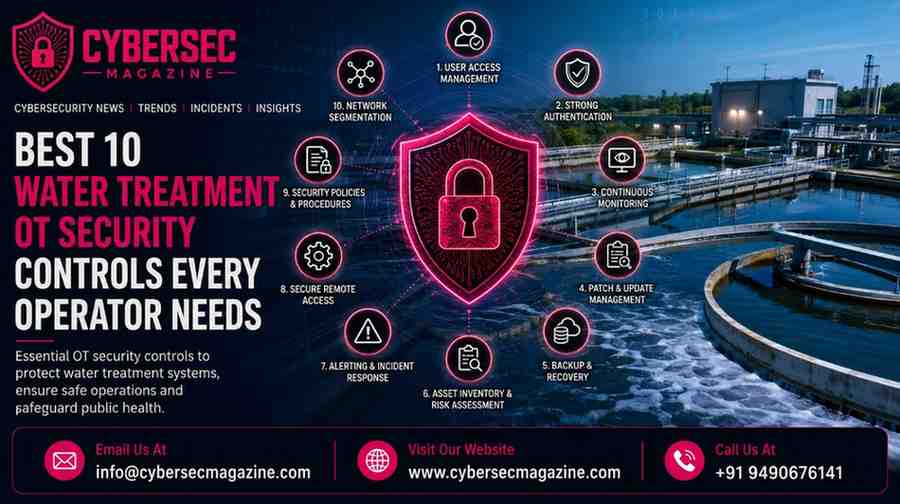
Protect your water treatment infrastructure with 10 essential OT security controls. Discover how to secure SCADA, mitigate remote threats, and ensure safety.
The New Reality of Water Sector Security
The water and wastewater sector, once protected by the physical limitations of “air-gapped” systems, now faces a sophisticated and persistent threat landscape. In 2026, the integration of Industrial Internet of Things (IIoT) sensors, cloud-based data analytics, and remote maintenance tools has fundamentally expanded the attack surface. Threat actors-ranging from state-sponsored groups to opportunistic cybercriminals-are no longer just targeting IT websites; they are actively seeking to compromise the underlying Operational Technology (OT) that controls pumps, valves, and chemical dosing systems.
When an adversary gains access to a SCADA environment, the consequences move beyond data theft into the realm of public health and safety. Because water utilities are often highly fragmented, with many smaller operators managing limited budgets and legacy infrastructure, a “one-size-fits-all” security model does not work. Securing these facilities requires an integrated approach that respects the high-availability demands of water treatment while implementing rigorous, OT-native security controls designed to prevent “blended” cyber-physical attacks.
Top 10 OT Security Controls for Water Utilities
1. Implement Multi-Factor Authentication (MFA) for All Remote Access
Remote access is the most frequent entry point for adversaries targeting water SCADA systems. Any connection-whether from a vendor, an engineer, or a remote operator-must be protected by robust Multi-Factor Authentication (MFA) using hardware tokens or biometrics rather than easily intercepted SMS codes. Relying solely on passwords, especially for remote desktop tools, is a critical vulnerability that attackers exploit to gain unauthorized control over process setpoints. By enforcing MFA, you ensure that even if credentials are stolen, the attacker cannot bridge the gap into your sensitive operational environment.
2. Enforce Strict Network Segmentation (The Purdue Model)
A flat network architecture allows malware or an attacker to move laterally from a compromised office workstation to a sensitive PLC controlling water pressure or chemical levels. Use industrial firewalls to implement micro-segmentation, dividing your network into distinct zones based on function and criticality. This “Purdue Model” approach restricts communication between the corporate IT network and the plant floor, ensuring that even if a breach occurs, the threat is contained. Only necessary traffic should be permitted to cross these boundaries, effectively creating a “digital moat” around your most critical control assets.
3. Establish Continuous Passive Asset Discovery
You cannot protect what you do not know exists. In fragile OT environments, active vulnerability scanning can inadvertently crash legacy PLCs or HMIs, leading to unplanned service outages. Instead, deploy passive monitoring solutions that listen to network traffic to automatically identify and inventory every device-from smart meters to chemical controllers. This provides a real-time, accurate asset database, helping you spot unauthorized “rogue” devices or unexpected communication flows that might indicate an ongoing security incident without ever risking the stability of your water treatment process.
4. Deploy Industrial-Native Intrusion Detection (IDS)
Generic IT security tools often fail to “speak the language” of industrial control systems, missing the subtle anomalies that precede a process disruption. Utilize an OT-native Intrusion Detection System (IDS) that understands industrial protocols like Modbus, DNP3, or OPC-UA. By baselining the “normal” behavior of your SCADA environment, the system can provide high-fidelity alerts when it detects abnormal command structures or unauthorized attempts to change process parameters. This allows your team to catch a “low-and-slow” attack before it escalates into a public health crisis.
5. Implement Independent Cyber-Physical Safety Systems
Digital controls should never be the only barrier between clean water and a chemical overdose. Integrate non-digital engineering solutions, such as physical interlocks and independent hardware safety systems, that operate outside of the SCADA network. These systems should be configured to prevent setpoints from reaching dangerous levels, regardless of what the digital control system commands. By keeping safety logic separate from network logic, you ensure that even a total compromise of the SCADA software cannot be manipulated to cause environmental or physical damage.
6. Mandate Secure Transient Device Handling
USB drives, contractor laptops, and other “transient” devices are common vectors for introducing malware into isolated OT networks. Implement a strict “sanitization” policy where any portable device must pass through a secure kiosk or scanning station before it can physically connect to the network. This removes the risk of “sneakernet” infections. For high-security zones, consider using hardware-enforced data diodes that allow diagnostic data to move out for analysis while physically blocking any inbound data flow, keeping your controller environment completely isolated from external traffic.
7. Adopt a “Secure by Design” Procurement Strategy
Cybersecurity should be a condition of purchase for all new water treatment equipment, not an afterthought. When upgrading pumps, sensors, or controllers, demand an accurate Software Bill of Materials (SBOM) and require vendors to prove that their products meet baseline security standards. By forcing vendors to provide transparency, you shift the burden of security upstream. This procurement-driven approach ensures your infrastructure is resilient from the moment it is installed, reducing the need for emergency patching and hardening later in the device’s lifecycle.
8. Formalize an OT-Specific Incident Response Plan
Standard IT incident response plans are insufficient for water treatment facilities where physical operations are at stake. Your IR plan must explicitly define who has the authority to initiate an emergency shutdown or switch to manual operation. Regularly conduct tabletop exercises that simulate cyber-physical scenarios, involving both IT security personnel and the plant operators who run the processes. By training together, you ensure that when a crisis hits, the team knows exactly how to maintain water quality and service continuity under extreme duress.
9. Strengthen Vulnerability Management with Risk Context
In a water treatment plant, you cannot simply patch every system whenever a new vulnerability is announced, as this risks operational stability. Prioritize your patching efforts based on the actual criticality of the asset to the water process. Use vulnerability data correlated with your asset inventory to focus on patching high-risk flaws on devices that are directly connected to critical infrastructure. If a device cannot be patched, apply “compensating controls,” such as hardening the network perimeter or disabling unnecessary services, to mitigate the risk until a maintenance window allows for an update.
10. Foster a “Cybersecurity Culture” from Boardroom to Breakroom
Cybersecurity is an operational discipline that requires the involvement of every employee, not just the IT department. Develop clear, actionable policies regarding password hygiene, phishing awareness, and reporting procedures that are relevant to the daily tasks of plant operators. By fostering a culture where security is seen as a component of “process safety,” you turn your workforce into a proactive detection layer. When everyone understands the risks-and the protocols for reporting suspicious activity-you significantly reduce the likelihood of human error leading to a successful cyber-attack.