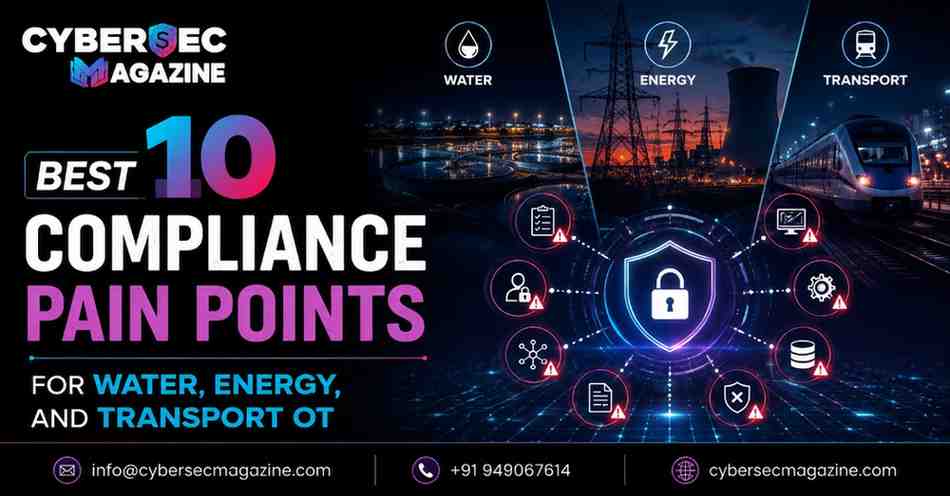
Best 10 Compliance Pain Points for Water, Energy, and Transport OT in 2026
Why OT Compliance Has Become More Complex
A decade ago, many industrial systems operated in relatively isolated environments. Today, industrial organizations are adopting:
- Industrial IoT sensors
- Edge computing platforms
- Remote maintenance solutions
- Cloud-based analytics
- AI-driven operational technologies
- Digital twins
- Predictive maintenance systems
While these technologies improve efficiency, they also expand the attack surface and increase regulatory scrutiny.
Modern compliance programs must now address:
- Cybersecurity risks
- Operational resilience
- Supply chain security
- Asset visibility
- Incident response
- Data governance
- Third-party access controls
For operators of critical infrastructure, compliance is no longer simply a legal requirement—it has become an operational necessity.
1. Legacy OT Systems That Cannot Meet Modern Security Requirements
One of the biggest compliance obstacles remains legacy industrial infrastructure.
Many water facilities, substations, energy plants, and transportation systems continue to operate equipment that was designed decades ago. These systems often lack:
- Authentication controls
- Encryption capabilities
- Secure logging
- Access monitoring
- Security patching mechanisms
Modern regulations increasingly require organizations to demonstrate secure system configurations and risk mitigation measures.
Unfortunately, replacing legacy infrastructure is often financially and operationally challenging.
Why It Creates Compliance Problems
Auditors frequently identify:
- Unsupported operating systems
- Obsolete PLCs
- End-of-life SCADA components
- Unpatched engineering workstations
Organizations must implement compensating controls to satisfy compliance requirements while maintaining operational continuity.
Recommended Approach
- Network segmentation
- Industrial DMZ implementation
- Continuous monitoring
- Virtual patching technologies
- Risk-based remediation strategies
2. Lack of Complete OT Asset Visibility
You cannot protect or audit what you cannot see.
Many organizations still struggle to maintain an accurate inventory of:
- PLCs
- RTUs
- SCADA servers
- HMIs
- Industrial switches
- IIoT devices
- Engineering workstations
Compliance frameworks increasingly require organizations to maintain accurate and continuously updated asset inventories.
Common Challenges
Asset inventories are often:
- Outdated
- Spreadsheet-based
- Manually maintained
- Incomplete
As a result, organizations cannot accurately demonstrate compliance during audits.
Recommended Approach
Implement automated OT asset discovery solutions capable of:
- Passive monitoring
- Device fingerprinting
- Firmware identification
- Real-time inventory management
3. Managing Third-Party and Vendor Access
Remote vendor access has become essential for modern industrial operations.
Equipment manufacturers, maintenance contractors, system integrators, and service providers frequently require access to OT environments.
However, third-party access remains one of the most significant regulatory concerns.
Compliance Challenges
Organizations often struggle with:
- Shared accounts
- Excessive privileges
- Unmonitored remote sessions
- Lack of access logging
- Inadequate vendor risk assessments
Many regulatory frameworks now specifically require organizations to control and document third-party access.
Recommended Approach
Implement:
- Zero Trust principles
- Multi-factor authentication
- Privileged access management
- Session recording
- Vendor access approval workflows
4. Increasing Incident Reporting Requirements
Regulators worldwide are demanding faster cyber incident reporting.
Critical infrastructure operators are increasingly required to notify authorities within specific timeframes after detecting significant cybersecurity events.
Why This Is Difficult
Many organizations lack:
- OT-specific incident response plans
- Detection capabilities
- Regulatory reporting procedures
- Defined escalation processes
Without preparation, organizations may fail to meet mandatory reporting deadlines.
Recommended Approach
Develop incident response programs that include:
- OT-specific playbooks
- Reporting workflows
- Executive communication procedures
- Regulatory notification guidelines
- Incident classification criteria
5. Supply Chain Security and Vendor Compliance
Supply chain cybersecurity has become a major focus area following several high-profile attacks targeting trusted vendors and software providers.
Critical infrastructure organizations must increasingly evaluate the security posture of:
- Hardware vendors
- Software suppliers
- Integrators
- Managed service providers
- Cloud service providers
Compliance Pain Points
Organizations often face:
- Limited supplier transparency
- Inconsistent vendor security practices
- Software bill of materials (SBOM) requirements
- Lack of supplier assessments
Recommended Approach
Establish formal vendor risk management programs that include:
- Security questionnaires
- Supplier audits
- Contractual cybersecurity requirements
- Continuous monitoring
6. OT Network Segmentation and Architecture Compliance
Modern compliance frameworks emphasize network segmentation as a foundational security control.
Unfortunately, many industrial environments evolved organically over decades without cybersecurity-focused design principles.
Common Findings During Audits
- Flat networks
- Unrestricted communication paths
- Shared credentials
- Inadequate firewall policies
These architectural weaknesses often lead to non-compliance findings.
Recommended Approach
Adopt a defense-in-depth architecture that includes:
- Industrial DMZs
- Security zones
- Secure conduits
- Firewall segmentation
- Controlled data flows
7. Workforce Shortages and OT Security Skills Gaps
Compliance requirements continue to expand while qualified OT cybersecurity professionals remain scarce.
Many organizations face challenges finding personnel with expertise in:
- Industrial control systems
- Regulatory compliance
- Incident response
- OT threat detection
- Industrial networking
Impact on Compliance
Organizations may struggle to:
- Conduct assessments
- Maintain documentation
- Implement controls
- Respond to audit findings
Recommended Approach
Invest in:
- OT cybersecurity training
- Cross-functional teams
- Security awareness programs
- Managed security services
- Workforce development initiatives
8. Continuous Monitoring and Threat Detection Requirements
Modern regulations increasingly expect organizations to detect threats before operational disruptions occur.
Traditional IT monitoring tools often fail to provide adequate visibility into industrial environments.
Compliance Challenges
Organizations frequently lack:
- OT-specific monitoring
- Industrial protocol visibility
- Threat detection capabilities
- Centralized logging
This limits their ability to demonstrate ongoing compliance.
Recommended Approach
Deploy:
- OT Security Monitoring Platforms
- Industrial IDS solutions
- Security Information and Event Management (SIEM)
- Behavioral analytics
- Continuous threat detection systems
9. Documentation and Audit Readiness
Many organizations focus heavily on technical controls but underestimate the importance of documentation.
Auditors require evidence demonstrating that controls are:
- Implemented
- Tested
- Maintained
- Reviewed regularly
Common Documentation Issues
Missing or outdated:
- Policies
- Risk assessments
- Network diagrams
- Incident response plans
- Vendor records
- Security procedures
Recommended Approach
Create a centralized compliance management process that continuously maintains:
- Asset inventories
- Security policies
- Risk registers
- Audit evidence
- Compliance reports
10. Keeping Up with Rapidly Changing Regulations
Perhaps the most difficult challenge is the pace of regulatory change.
Governments and industry regulators continue introducing new cybersecurity requirements to address emerging threats.
Organizations must track evolving obligations affecting:
- Critical infrastructure protection
- Operational resilience
- Cyber incident reporting
- Supply chain security
- Data protection
Why This Matters
Compliance programs built around outdated requirements may quickly become insufficient.
Organizations that fail to adapt face:
- Regulatory penalties
- Increased cyber risk
- Operational disruptions
- Reputational damage
Recommended Approach
Establish a governance framework that continuously monitors:
- Regulatory updates
- Industry standards
- Threat intelligence
- Sector-specific guidance
Emerging Compliance Trends Shaping OT Security in 2026
Several trends are influencing how regulators evaluate critical infrastructure cybersecurity:
Operational Resilience Requirements
Organizations must demonstrate their ability to maintain operations during cyber incidents.
Zero Trust for Industrial Networks
Regulators increasingly expect least-privilege access and continuous verification.
Supply Chain Transparency
Vendor accountability and software transparency continue gaining importance.
AI and Automation Governance
As AI becomes more prevalent in industrial environments, regulators are beginning to examine AI security and governance controls.
Cybersecurity Performance Metrics
Organizations are expected to provide measurable evidence of security effectiveness rather than simply proving policy compliance.
Building a Sustainable OT Compliance Strategy
Successful compliance programs are no longer built around passing annual audits.
Leading organizations are adopting continuous compliance models that integrate cybersecurity directly into operational processes.
Key priorities include:
- Asset visibility
- Risk management
- Continuous monitoring
- Secure architecture
- Workforce readiness
- Incident preparedness
- Vendor governance
Organizations that align compliance with operational resilience gain benefits beyond regulatory satisfaction, including stronger security, reduced downtime, and improved stakeholder confidence.
Conclusion
Compliance within water, energy, and transportation OT environments has evolved far beyond documentation and checkbox exercises. In 2026, regulators expect organizations to demonstrate real cybersecurity maturity, operational resilience, and proactive risk management.
Legacy infrastructure, asset visibility gaps, vendor access challenges, incident reporting obligations, supply chain risks, workforce shortages, and evolving regulations continue to create significant compliance hurdles.
The organizations best positioned for success are those that treat compliance as an ongoing cybersecurity program rather than a periodic audit requirement. By adopting a risk-based approach, implementing continuous monitoring, strengthening governance, and modernizing OT security architectures, critical infrastructure operators can meet regulatory expectations while improving the overall security and reliability of their operations.
As cyber threats targeting critical infrastructure continue to increase, compliance and cybersecurity are becoming inseparable components of modern OT risk management.